Suntic
UV index in Rio de Janeiro today
Rio de Janeiro pairs a famous beach culture with strong tropical sun, and summer UV regularly reaches extreme on Copacabana and Ipanema. The only accurate figure is a live one for your exact spot: Suntic shows Rio de Janeiro's real-time UV index and a 10-day forecast.
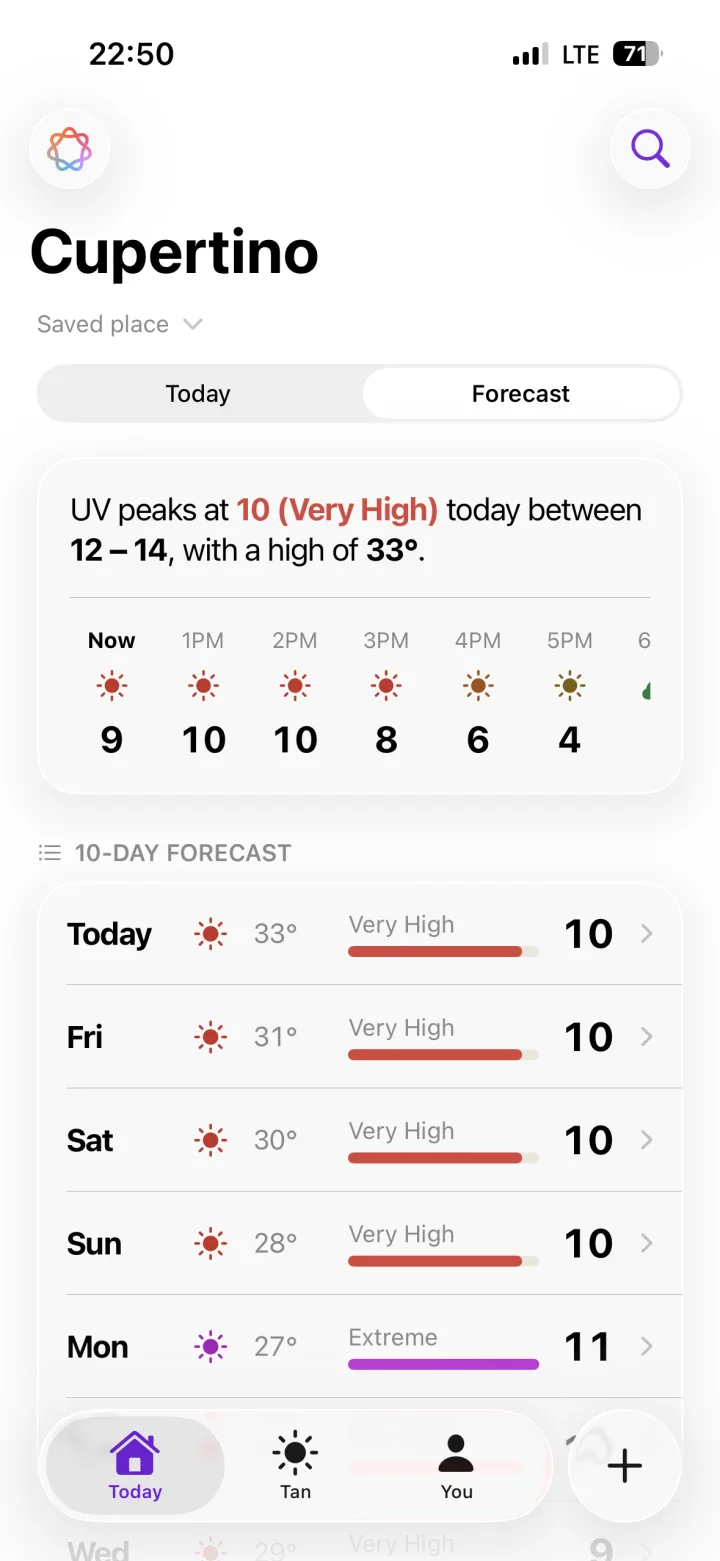
Sun and UV in Rio de Janeiro
On Brazil's tropical Atlantic coast in the Southern Hemisphere, Rio gets powerful sunshine and very high to extreme midday UV across the southern summer. UV stays significant well into autumn and spring, and the city's beach-centred life means long hours in direct and reflected sun. Clear summer days can push UV to among the highest many visitors will ever experience.
When is UV highest in Rio de Janeiro?
Because Rio de Janeiro is in the Southern Hemisphere, its strongest UV falls over the southern summer: broadly November to March. As everywhere, UV peaks around solar noon, roughly 10am to 4pm. For more on this, see when is the sun strongest.
The UV index scale
| UV index | Risk level | What to do |
|---|---|---|
| 0-2 | Low | Minimal risk. Safe to be outside; sunglasses on bright days. |
| 3-5 | Moderate | Take care at midday. Use SPF 30+, a hat and shade around noon. |
| 6-7 | High | Protection needed. SPF 30+, cover up, seek shade 10am-4pm. |
| 8-10 | Very high | Extra protection. Avoid the sun at midday; SPF, clothing and shade are essential. |
| 11+ | Extreme | Take all precautions. Unprotected skin can burn quickly; stay inside or fully covered at peak hours. |
UV index categories follow the World Health Organization / US EPA scale.
Staying sun-safe in Rio de Janeiro
- As a Southern-Hemisphere city, Rio's strongest UV runs from late spring through to autumn, peaking over Christmas and New Year.
- Copacabana and Ipanema stack reflected UV off sand and sea on top of an already high index.
- A climb up Sugarloaf or Corcovado means stronger UV at altitude with little shade.
Wherever you are, the basics hold: use broad-spectrum SPF 30+, seek shade around midday, cover up, and never let your skin burn. See our sunburn prevention tips.
See Rio de Janeiro's live UV index
Suntic turns the live UV index into personal safe-sun times, sunscreen reminders and vitamin D tracking on your iPhone.