Suntic
Tan more safely, with the UV index on your side
Let's be honest: no tan is completely safe. But understanding UV and protecting your skin makes a real difference. Here's how Suntic helps you lower the risk.
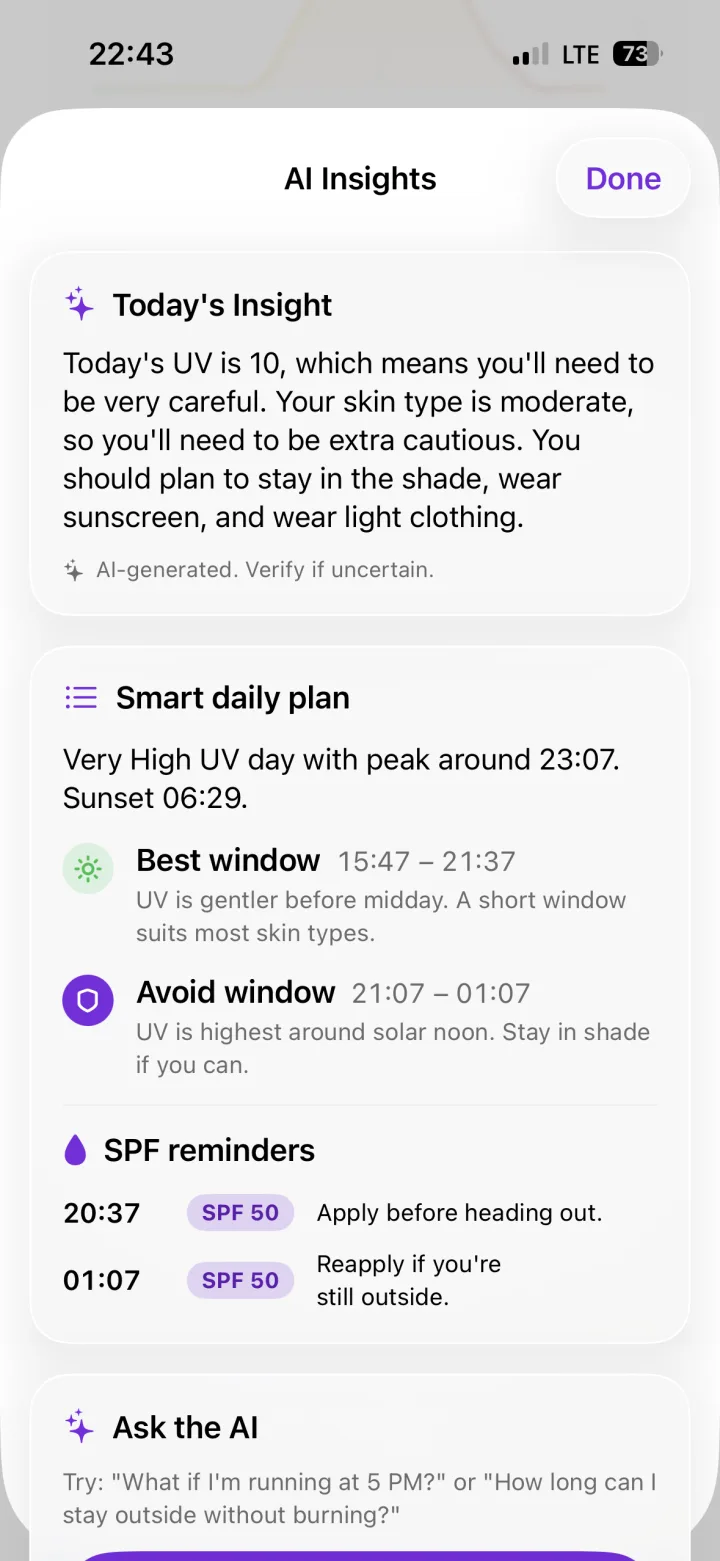
There is no completely safe way to get a tan. A tan is the skin's response to ultraviolet damage, and UV exposure is linked to premature ageing and skin cancer. We won't pretend otherwise, and neither should any app. What you can do is understand the sun and reduce your risk, which is what Suntic is designed to help with.
How to reduce the risk
- Know the UV index. The higher it is, the faster unprotected skin burns. Suntic shows it live for your location.
- Use sunscreen properly. Broad-spectrum SPF 30+, applied generously and reapplied often. Suntic reminds you.
- Respect your skin type. Fairer skin burns sooner; everyone's limit is different. Suntic personalizes its estimates.
- Avoid peak hours. UV is usually strongest 10am-4pm. Seek shade, cover up and use the forecast to plan.
- Never aim to burn. Sunburn is the clearest sign of damage. Stop well before your skin reddens.
What Suntic does (and doesn't) do
Suntic gives you live UV, conservative safe-sun estimates, reapply reminders and a forecast so you can make informed choices. It does not make tanning safe, provide medical advice, or detect skin conditions. If you want a tan with no UV risk at all, a self-tanning product is the only option dermatologists consider safe.
Learn more in our guides to tanning more safely with the UV index and preventing sunburn.
FAQ
Is tanning ever completely safe?
What's the safest way to get a tan?
Does sunscreen make tanning safe?
Trusted sun-safety resources
Suntic is an informational tool. For authoritative guidance on UV and skin health, see:
Get Suntic free
Suntic turns the live UV index into personal safe-sun times, sunscreen reminders and vitamin D tracking on your iPhone.