For beach days

Sun-smart beach days, start to finish

The beach is the easiest place to get caught out: hours in the open, plus sand and water bouncing extra UV onto your skin. Suntic helps you enjoy it without the burn.
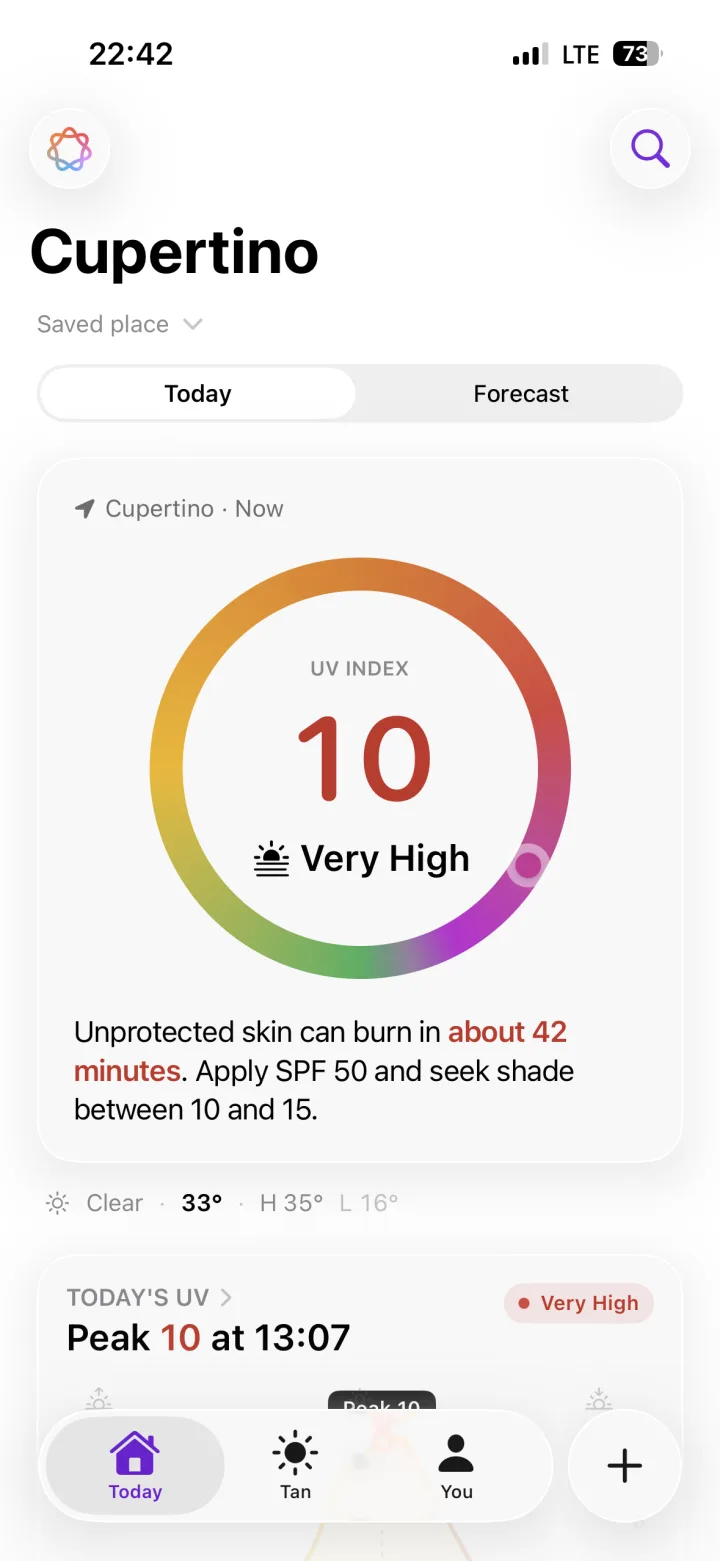
Suntic UV index home screen showing Very High UV and time to burn

A day at the beach stacks up sun exposure fast. You are usually out for hours, there is little natural shade, and both sand and water reflect ultraviolet rays back up at you, so your real exposure is higher than the UV index number alone implies.

Why the beach is high-risk for your skin

Reflection

Sand and especially water reflect UV, adding to the direct sun you already get.

Long exposure

Beach days mean long, continuous time outdoors, often right through the midday peak.

Sunscreen washes off

After every swim or towel-dry, your protection drops.

A deceptive breeze

A cool sea breeze makes strong UV feel deceptively mild.

How Suntic helps at the beach

Suntic shows the live UV index for your exact spot and an estimate of your safe-sun time, and reminds you to reapply sunscreen before it wears off, so you can check it at a glance without guessing.

Quick beach checklist

  1. Check the UV index before you set up, and plan shade for the midday peak.
  2. Apply broad-spectrum SPF 30+ generously, 15 minutes before sun, and reapply every two hours.
  3. Reapply after every swim or towel-dry, and use a hat, sunglasses and UV-protective clothing.
  4. Take shade breaks under an umbrella, and remember it won't block reflected UV, so keep sunscreen on.
FAQ

FAQ

Is the UV index higher at the beach?
The index is the same for your location, but your effective exposure is higher because sand and water reflect extra UV and you spend longer in the open. Treat the beach as a high-exposure setting.
How often should I reapply sunscreen at the beach?
At least every two hours, and straight after swimming, sweating or towelling off. No sunscreen is fully waterproof, so swimming reduces its protection.
Can I burn at the beach on a cloudy day?
Yes. Much UV passes through cloud, and reflection off water and sand continues. Check the index, not the sky: see cloudy weather and UV rays.

Get Suntic free

Suntic turns the live UV index into personal safe-sun times, sunscreen reminders and vitamin D tracking on your iPhone.

Download Suntic on the App Store