Suntic
Latitude
The closer to the equator, the higher the typical UV.
Sun strength changes dramatically from one destination to the next. A trip toward the equator or up a mountain can mean far stronger UV than you're used to. Suntic tells you before it catches you out.
The sun behaves very differently depending on where you go. Travel closer to the equator and UV is stronger year-round; head to altitude and it intensifies further; cross into the other hemisphere and the seasons (and the peak UV months) flip entirely.
The closer to the equator, the higher the typical UV.
UV rises roughly with elevation, so mountains and high cities are stronger.
Southern-Hemisphere summer runs December to February.
Snow, water and sand all bounce extra UV onto you.
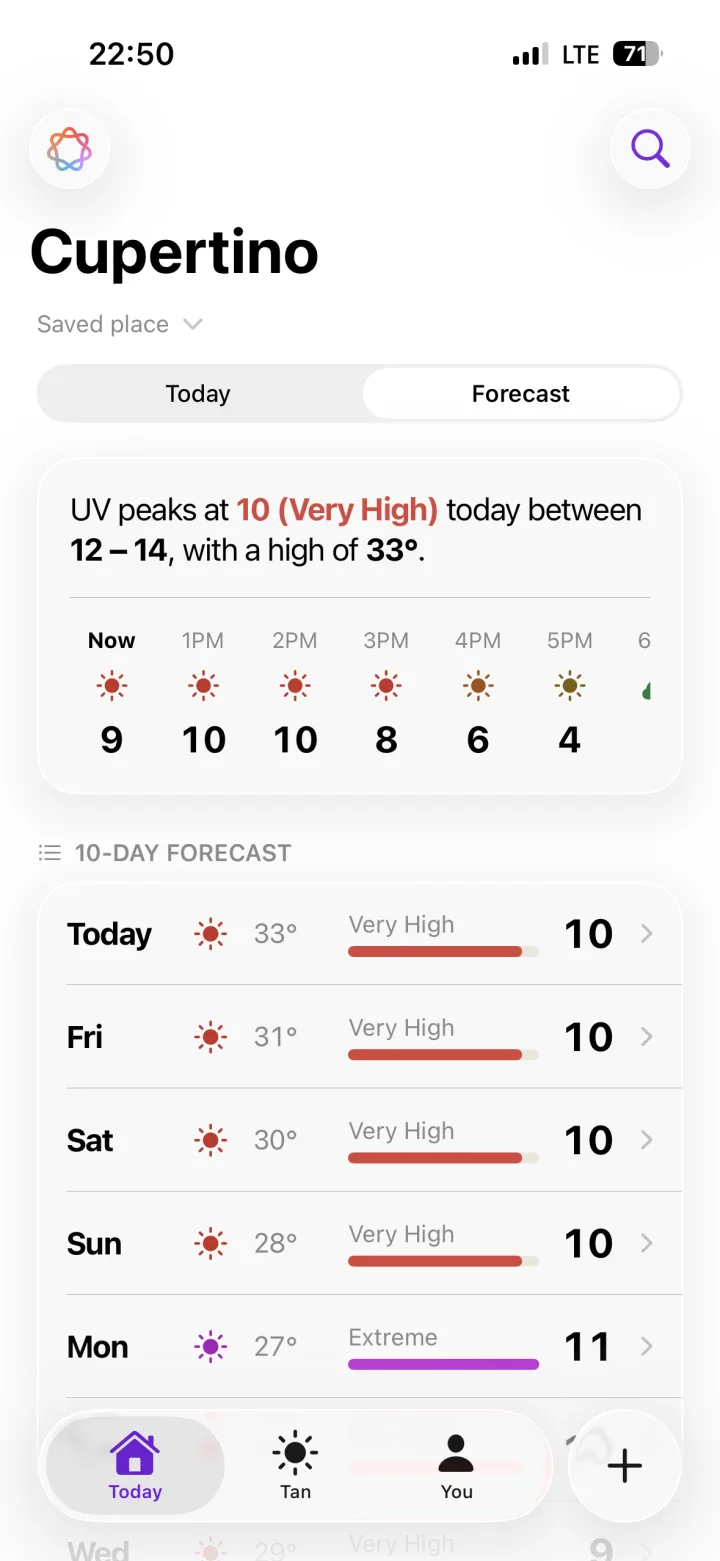
Before you travel, check the destination's typical UV with our UV index by city guides, and use Suntic's 10-day forecast to plan excursions. Suntic Pro lets you save multiple places, so you can watch UV at home and at your destination at once.
A common holiday mistake is assuming a cool or breezy destination has gentle sun, yet many high-altitude and southern destinations have intense UV. Go by the live index, pack broad-spectrum SPF 30+, and remember a tan is your skin reacting to UV, not a sign of safety. See what UV means for your skin.
Suntic turns the live UV index into personal safe-sun times, sunscreen reminders and vitamin D tracking on your iPhone.