For runners & outdoor workouts

Time your run around the UV, not just the weather

The best-looking conditions for a run, bright, dry and calm, are often the highest-UV window of the day. Suntic shows the live UV index so you can plan timing and routes with your skin in mind.
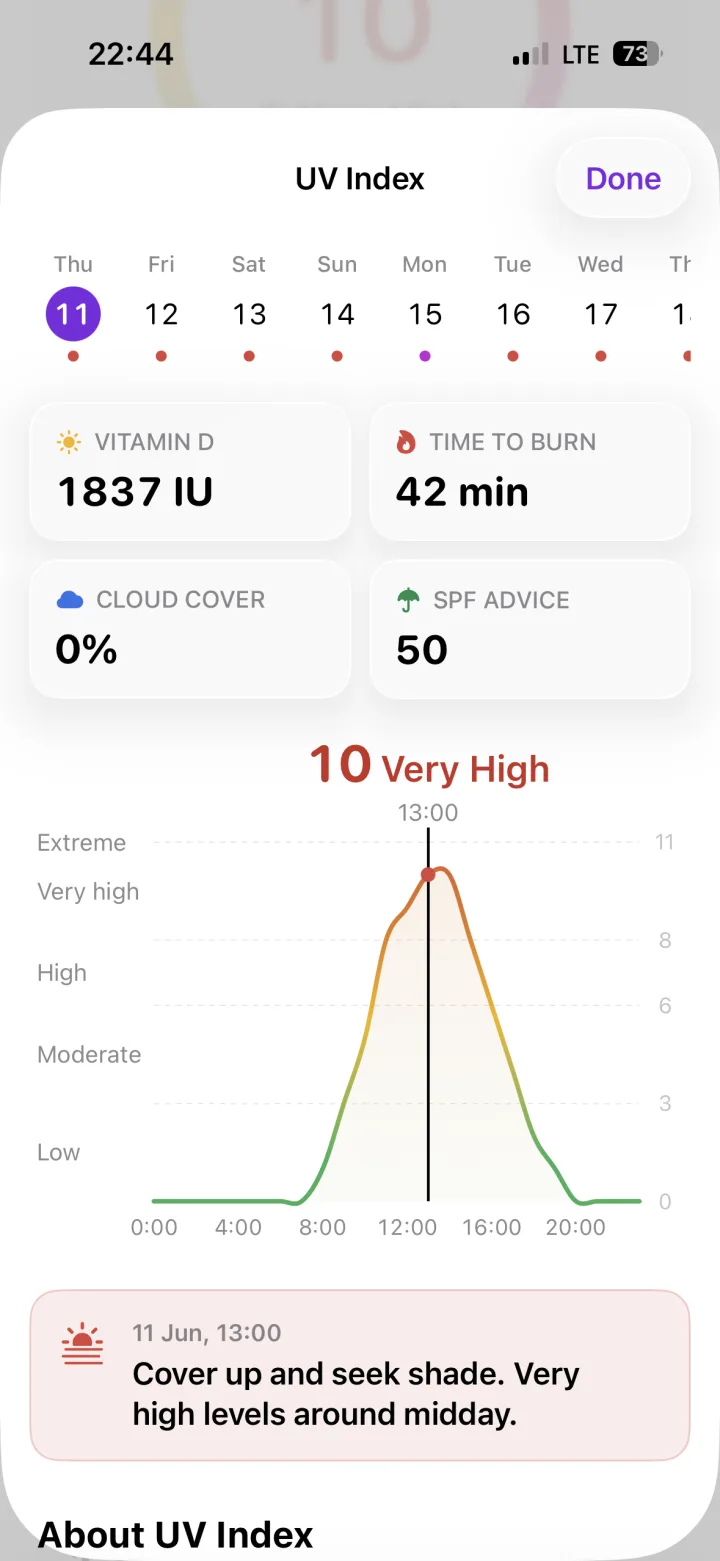
Suntic UV index detail showing the day's UV curve, useful for planning a run

Runners, cyclists and anyone training outdoors face a specific problem: the clearest, most appealing conditions for a workout (bright, dry, little wind) are usually also the highest-UV hours. Add sweat, which strips sunscreen fast, and repeated sun-soaked training sessions add up to real cumulative UV exposure over a season.

Why outdoor training is a high-UV activity

Bright and dry means high UV

Clear skies and dry air, the conditions runners love, mean little cloud to soften UV.

Sweat strips sunscreen fast

A long run in hot conditions can wash off or dilute sunscreen well before the two-hour mark.

Midday sessions hit the peak

A lunchtime run lands squarely in the 10am-4pm window when UV is usually strongest.

Wind and shade trick you

A breeze or tree-lined route feels cooler but does little to cut UV exposure.

How Suntic helps you time a run

Suntic shows the live UV index for your exact location and a forecast across the day, so you can see at a glance whether an early morning, midday or evening session means lower UV, without giving up your route or your pace.

A sun-smart training checklist

  1. Check the live UV before you head out, not just the temperature or a "feels like" forecast.
  2. Where your training plan allows, shift long or high-intensity sessions earlier or later in the day; see how UV rises and falls in best time of day to tan.
  3. Use a sweat-resistant, broad-spectrum SPF 30+ and reapply on any session longer than about two hours.
  4. Don't rely on cloud, wind or shade alone to judge risk: check cloudy weather and UV rays before assuming an overcast morning is safe.
FAQ

FAQ

What's the best time of day to run to avoid high UV?
Early morning or early evening are usually lower-UV than a midday session, though the exact pattern depends on season and location. Check the live UV index for your run time rather than assuming.
Does sweating make sunscreen less effective?
Yes. Heavy sweating breaks down and washes off sunscreen faster than normal wear, so reapply on longer sessions or use a sweat- or water-resistant formula, and reapply regardless of the resistance rating.
Is UV lower on a windy or cloudy run?
Not reliably. Wind has no effect on UV, and thin or broken cloud still lets much of it through. Judge by the UV index, not how the weather feels.

Get Suntic free

Suntic turns the live UV index into personal safe-sun times, sunscreen reminders and vitamin D tracking on your iPhone.

Download Suntic on the App Store